The Lab, the map, and Gravel9 Radio
Research that helps people investigate a place—and helps radio tell them what is happening there.
Current direction and development roadmapRead entry
Research & publication arm — Unit 01
Digital Sidewalk Lab is the research and publication unit of Pip Projects, Inc. It publishes the Digital Sidewalk framework and the research built on it, and it develops low-cost methods for civic and environmental observation. Founded 2024 by Darby Bailey McDonough, Ph.D.
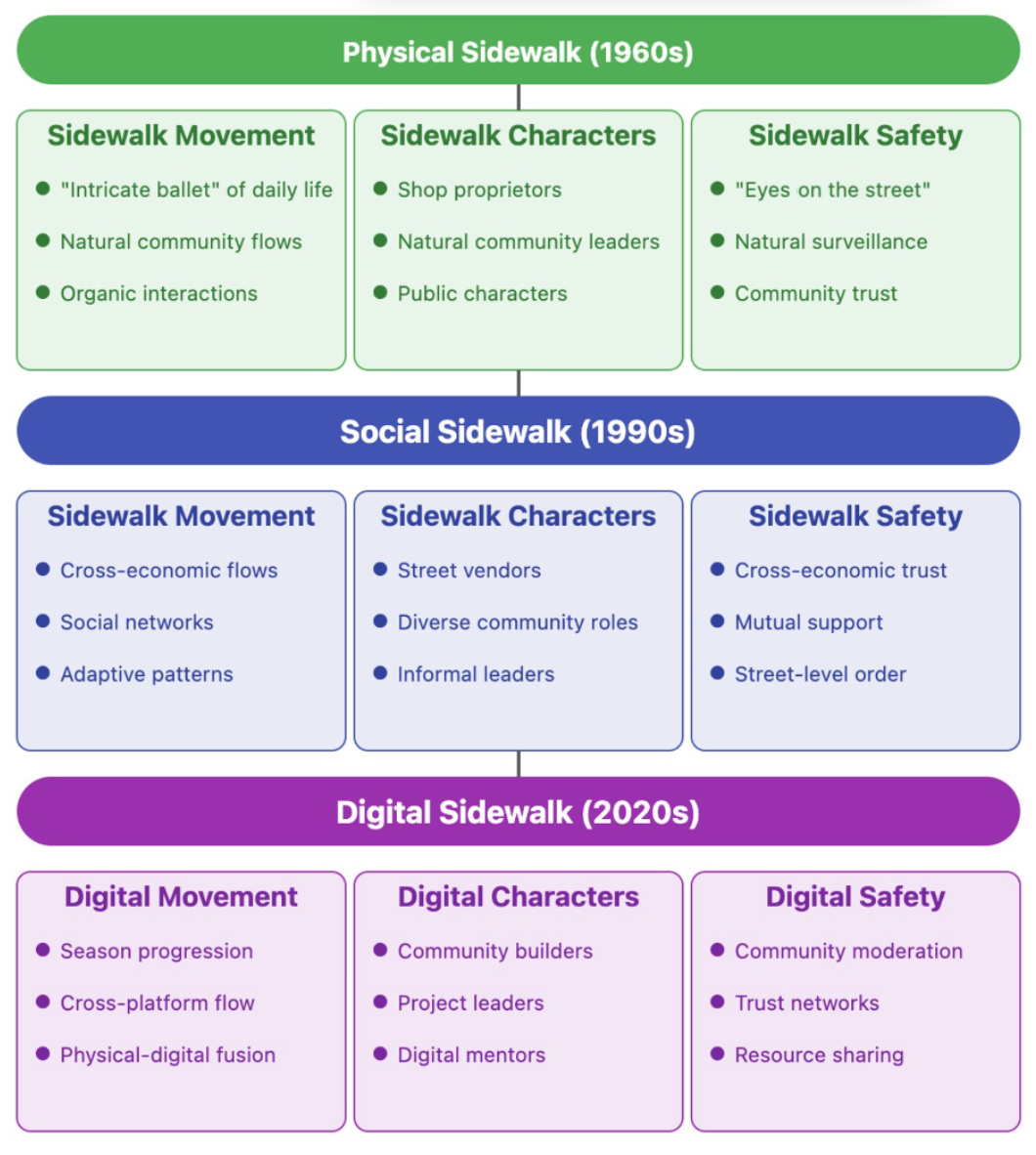
Digital Sidewalk Lab is the research and publication arm of Pip Projects, Inc. It houses the academic and pedagogical work of Darby Bailey McDonough, Ph.D., including The Digital Sidewalk — a measurable framework for entertainment-education grounded in Jane Jacobs’ urban sociology, Gordon Pask’s Interaction of Actors Theory, and Mitchell Duneier’s ethnographic methodology from his book Sidewalk. Research is peer-reviewed and presented at IEEE and national communication association conferences.
Since 2026 the Lab also runs a civic and environmental sensing platform. Preprints are open access. A storm dataset has been collected; public release is pending.
Three names
Research entries and journal entries, each labeled by the kind of evidence behind it. The first entry describes the Lab, the map, and the radio and where each stands today.
Research that helps people investigate a place—and helps radio tell them what is happening there.
The planned release separates the collection and observation tools from optional detection engines.
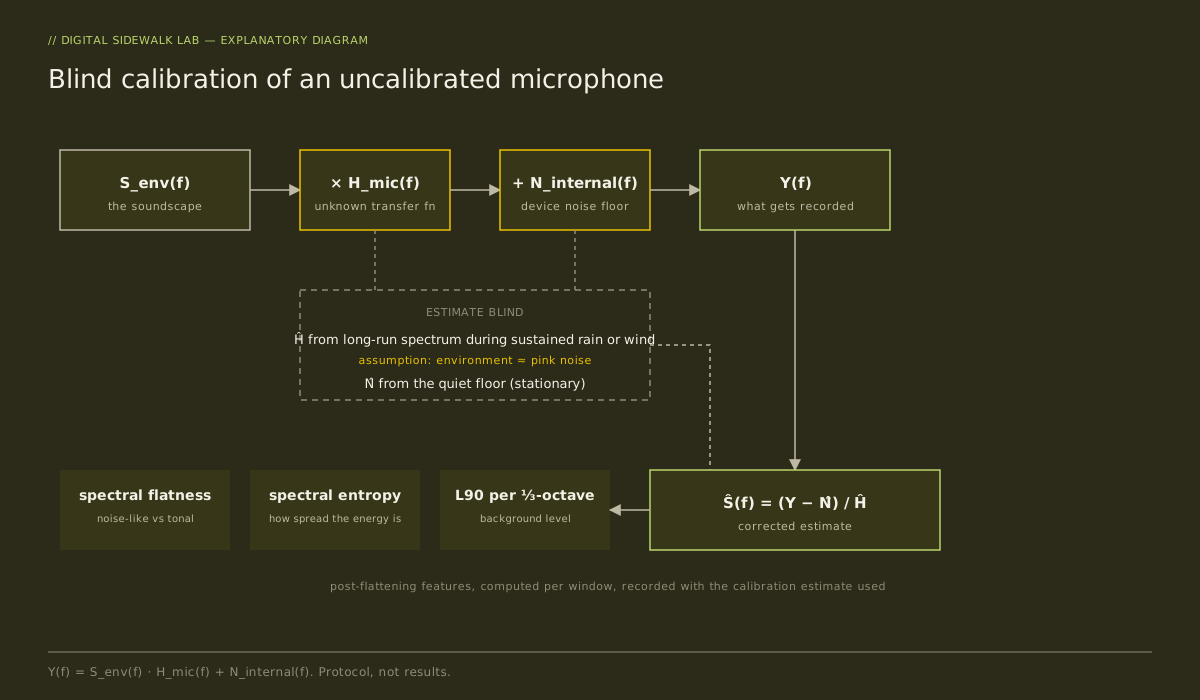
A proposed calibration protocol asks how much device variation can be estimated without a reference microphone at every node.
The August prototype separates original evidence from later interpretation and records which components were implemented.
The next research question is which observations from Buildspace remain useful across different settings.
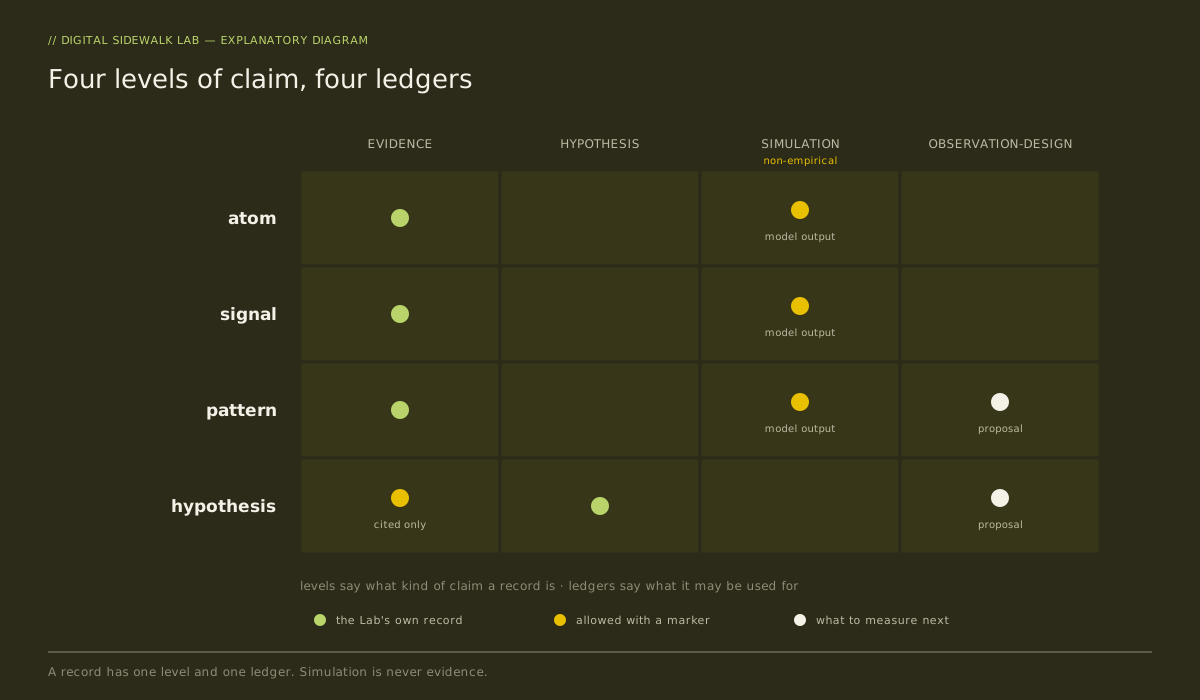
Four record levels help the Lab track how a measurement becomes a signal, a pattern, or a hypothesis.
Six areas, from the community-learning framework to observation design. Each is described on the research page.
Entertainment-education through orality, sound, and cybernetic feedback in decentralized digital and physical communities.
Frameworks linking acoustic environments, psychosocial systems, and community cybernetics to resilience outcomes.
Pask’s Interaction of Actors Theory applied to transmedia programming and decentralized community infrastructure.
Mass-media persuasion, film rhetoric, and narrative design as social-impact infrastructure for learning communities.
Phone-based sensor networks, blind microphone calibration, observation schemas with explicit missingness, and open-core release. This is the Lab.
Given evidence and competing hypotheses, which measurement is worth taking next. Validated on synthetic agents; shelved until a real ambiguity calls for it.
Peer-reviewed papers, open-access preprints, datasets, and presentations, with the full ledger on the publications page.
Sensing platform: field-test console, sensor rig, dataset, and open-source release.
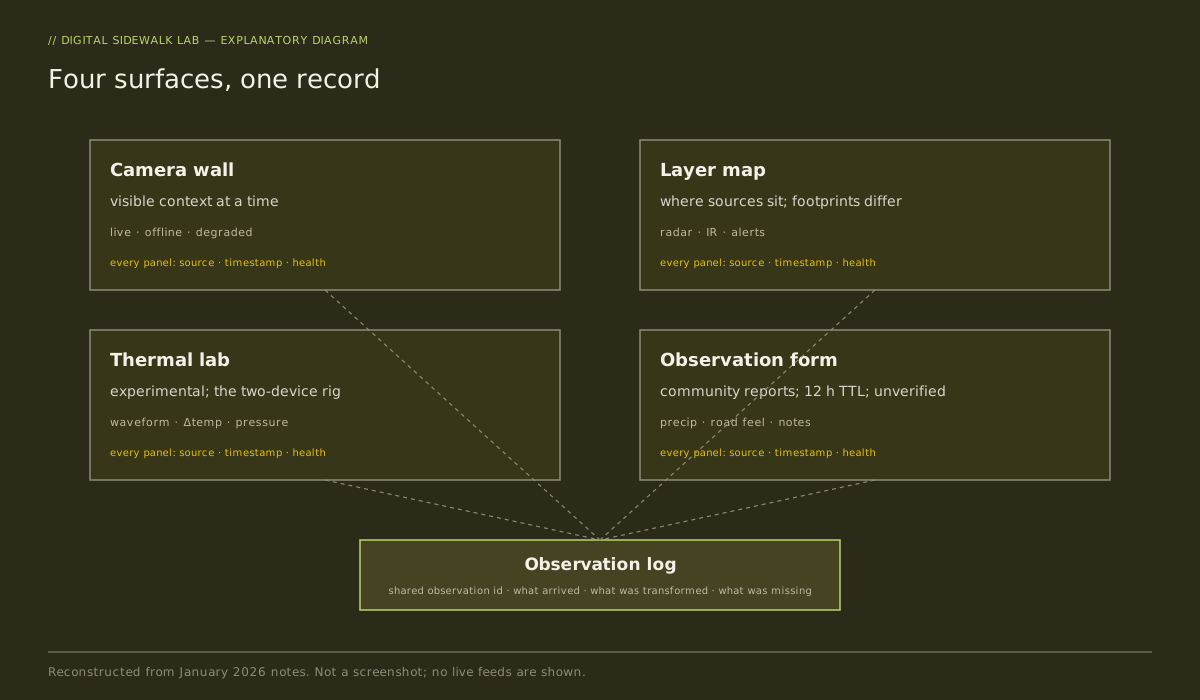
Layered weather map, camera wall with source health, community observation intake, and an advisory ticker. A research instrument, not an emergency service.
Open the console →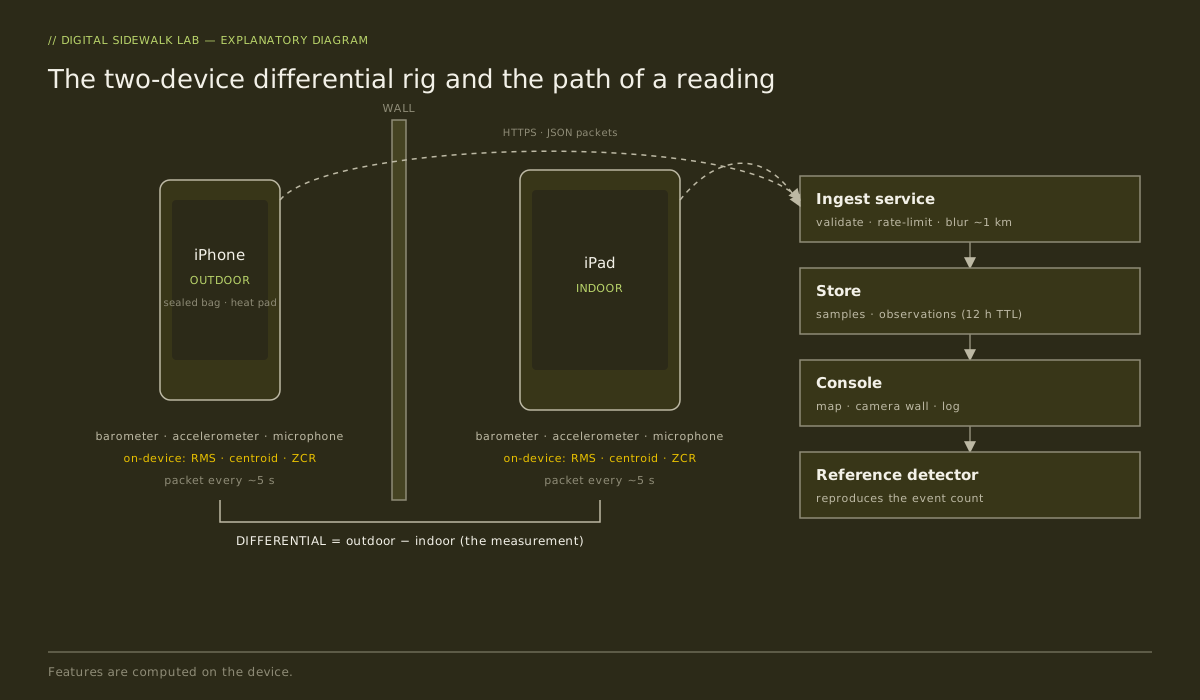
A two-device differential rig through a real ice storm. Working analysis reports 17.5 hours, a 10.8 hPa pressure drop, 82 flagged audio events, and a centroid shift toward 3,500–3,900 Hz during ice. Dataset collected; public release pending.
Read the record →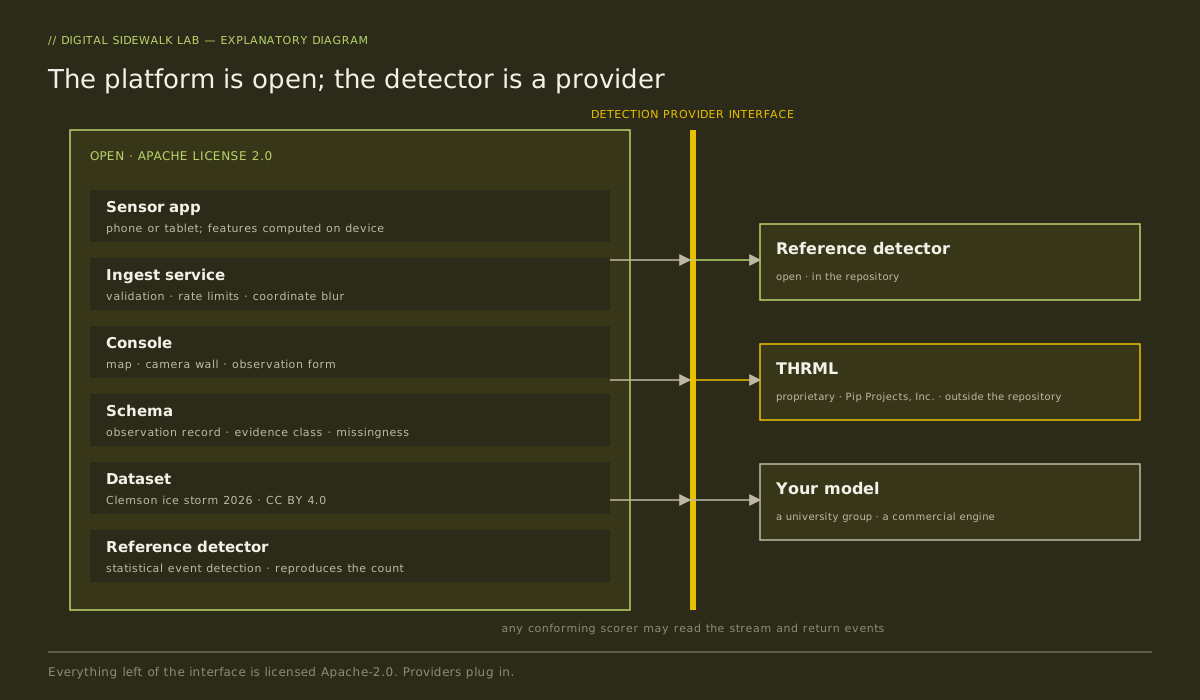
Sensor app, ingest, console, schema, and reference detector under Apache 2.0; dataset under CC BY 4.0, subject to the release files. The Lab’s own engine plugs in as a provider and is not required to run it.
The open-core boundary →Real-time visualization of 100 Starlink satellite positions, interference modeling, and fitness-based orbital optimization using D3 force simulation and React.
Launch demo →Contributor onboarding for the open-source platform begins with its public release.
Program status
Field operators for the 2027 season will be able to run a phone or tablet as a sensor node using the open-source platform. Each step will be reported on this site when it is complete.