Journal — StormNet
The field-test console
The StormNet prototype brought maps, camera views, sensor readings, and human observations into one research interface.
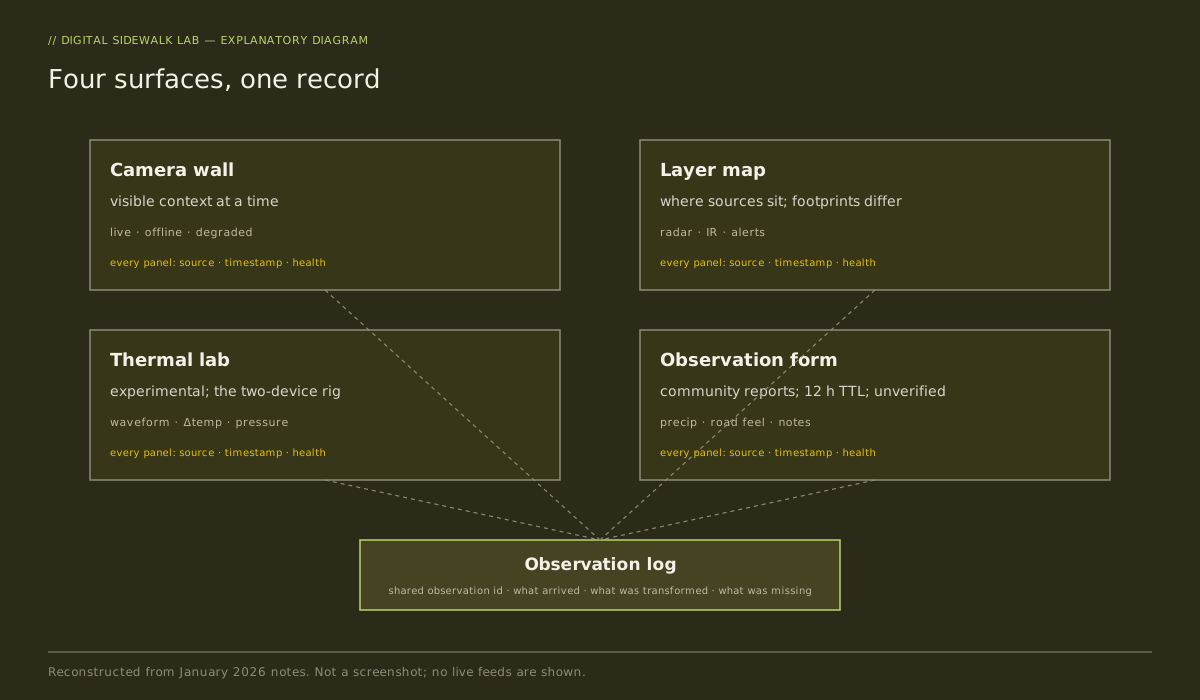
The January 2026 field-test console brought several ways of observing weather into one browser interface. It was deployed under the working name StormNet, with a camera wall, map layers, an experimental sensor panel, and an observation form.
The purpose was to help an observer compare sources at a place. A camera view, a regional overlay, a phone reading, and a person's report can each contribute information, but they describe different areas, times, and kinds of evidence.
Four views with different jobs
The camera wall organized public views with source-health labels. The map placed layers such as radar and alerts in geographic context. The experimental panel displayed the phone-rig readings. The form collected observations about conditions, with reports marked unverified and given a limited lifetime in the design.
These views were useful together because they exposed questions a single display could conceal. Was the camera image current? Did the regional layer cover the same area as the report? Was the sensor reading from indoors or outdoors?
Connecting a display to its record
The next architectural step was to connect the views through shared observation identifiers. A reader should be able to move from something shown on the map to its source, timestamp, processing history, and permitted use. The January console and the later record architecture represent different stages of that work.
The prototype's original address is stormnet.pages.dev. Its availability and the freshness of individual feeds are separate operational questions; this retrospective does not assert that a particular device is currently transmitting.
The console provides a concrete precursor to the Gravel9 Master Map: a place to bring observations together while preserving their differences. The observation-record design describes the information needed behind those views.