Journal — StormNet — journal entry
Keeping the rig running through an ice storm
The field conditions behind the Clemson dataset: a phone outside, a tablet inside, and a change of placement during the night.
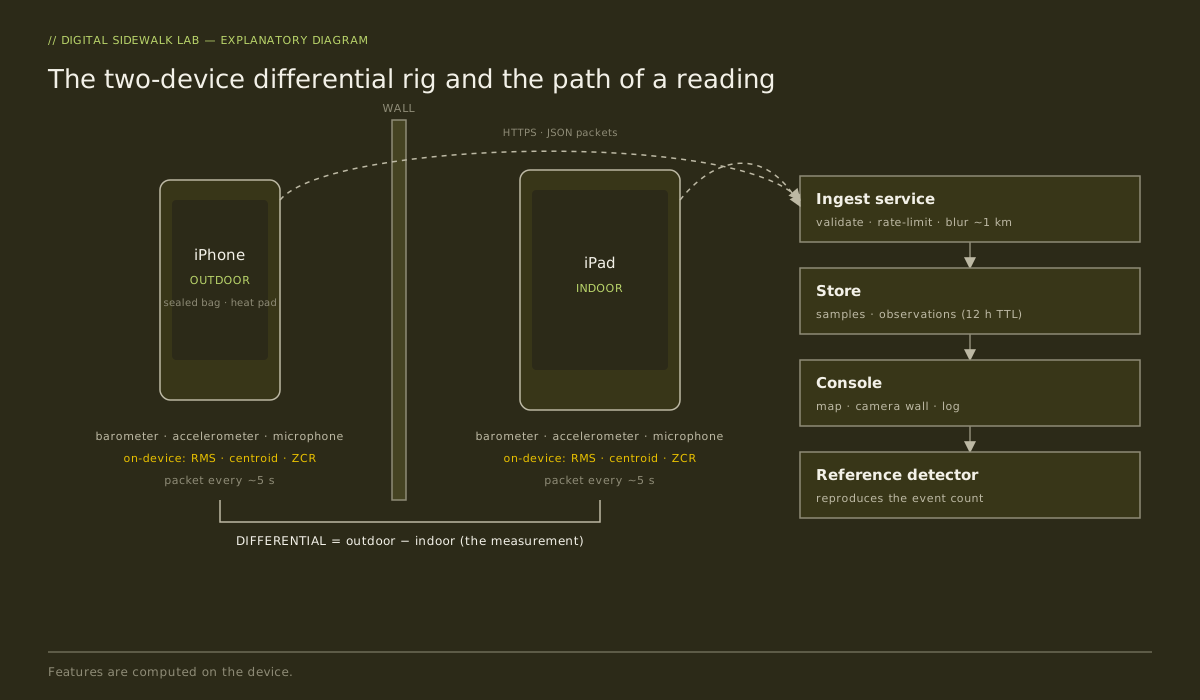
During the Clemson ice storm of January 24–25, 2026, I ran a sensor app on an outdoor iPhone and an indoor iPad. The working notes from that night document a practical problem: the outdoor phone stopped running, and I had to change its placement to continue collecting data.
The phone was in a freezer bag near an exterior door. After finding it off, I restarted it and moved it closer to the house, using a heat blanket and external power. The notes also describe marking changes in precipitation with timestamps, screenshots, and a short voice memo.
These details matter because the instrument's surroundings were part of the measurement. The bag, placement, power interruption, and move toward the door all belong in the account of how the record was made. A later analysis needs to know about them before interpreting a change in the signal.
My background in radio and recorded voice made audio an instrument I wanted to investigate. I was interested in whether changes I could hear would also appear in the features the app recorded. The field test put that question into a practical setting, with consumer hardware and the problems that come with running it outdoors.
The night produced a record worth analyzing, but it also produced a list of things the next deployment needs to capture more systematically: device interruptions, placement changes, manual observations, and their timing. Those are useful outputs of a field test even before a detector is evaluated.
The technical account describes the reported sample count, pressure change, audio features, and limitations. This entry preserves the circumstances behind that file so they do not disappear when the observations become rows in a dataset.